Keyboard Group Buys Explained: Preorders, Crowdfunding, and Risks
Understand keyboard group buys, preorders and crowdfunding, learn from documented project problems, and check the seller, production plan and terms before joining.
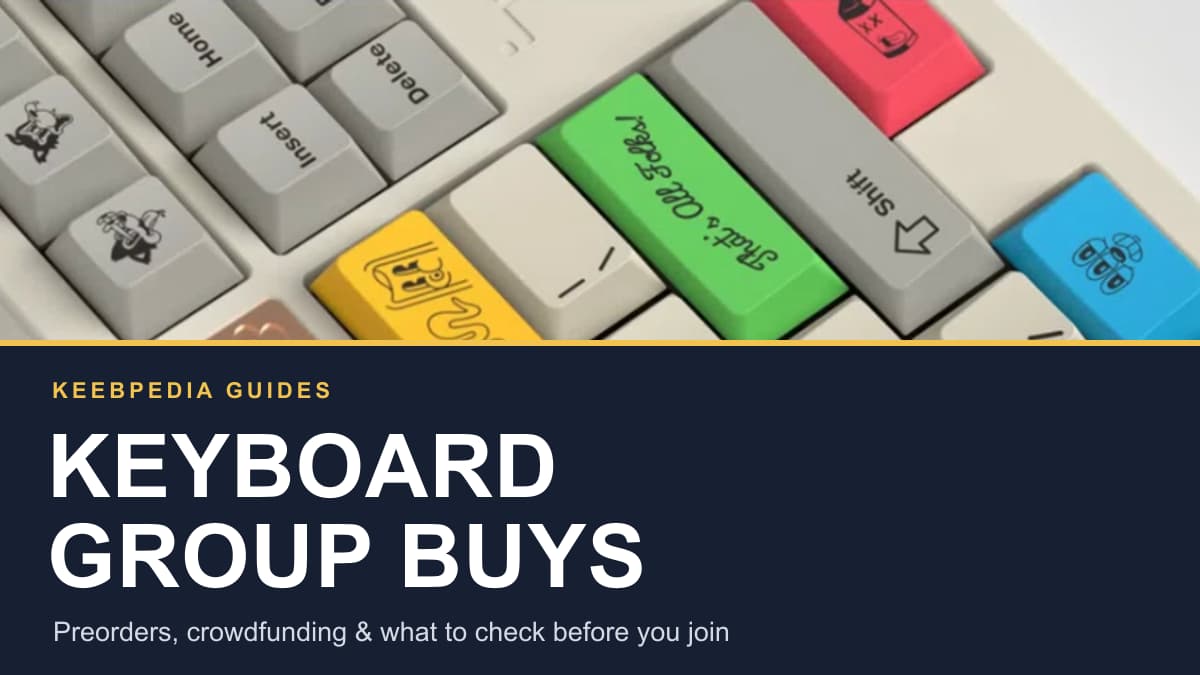
What is a keyboard group buy?
A keyboard group buy, often shortened to GB, collects orders for a defined production run. It can bring a community design, unusual layout or small keycap set into production by combining demand that would be difficult to serve one order at a time. An ordering window, a minimum order quantity and a planned manufacturing schedule are common features, but the exact arrangement depends on the organizer.
Joining usually means committing money before the promised item is ready to dispatch. The buyer is therefore evaluating both the product and the work still needed to deliver it. A compelling render, a popular designer and an earlier successful project each answer only part of that question.
This guide explains how group buys compare with preorders and reward-based crowdfunding, then uses documented cases to show what to check before participating. The aim is a decision based on the actual project, rather than confidence in a label.
Group buy, preorder and crowdfunding can overlap
These terms describe different aspects of a transaction. Group buy describes aggregated ordering for a run. Preorder describes an advance order, while crowdfunding describes raising support for a project through a funding arrangement. A single project can involve more than one of them.
Preorder is especially worth checking against the seller’s definition. ProtoTypist says production has started and it has already paid the manufacturer. GEONWORKS uses the term when a purchase order has been submitted or production has started. CannonKeys describes certain GMK preorders as extras it ordered during the original GB, to ship when that GB is fulfilled. Those are different positions in the production cycle.
| Label | Typical arrangement | What to verify |
|---|---|---|
| Group buy | Orders are combined for a production run, often within a window and subject to an MOQ. | What happens if the MOQ is missed, whether supplier orders are paid, and what remains to manufacture. |
| Preorder | An order is accepted before a future shipment; the manufacturing stage varies by seller. | The store’s definition, actual production status, allocated quantity and cancellation terms. |
| Reward-based crowdfunding | Backers support a creator’s project under platform-specific funding rules. | The working product, manufacturing plan, creator obligations and refund process. |
| In stock | The seller describes physical inventory as ready to dispatch. | Whether the selected variant is actually held, dispatch timing, returns and support. |
These categories can overlap. Product-specific terms and evidence matter more than a general label.
Where does Kickstarter fit?
For a hardware backer, Kickstarter can be close to a GB in practical risk: money supports a product before the promised delivery is complete. GEONWORKS itself describes group buys as a form of crowdfunding. However, Kickstarter is a platform with its own pledge rules, and it is not a synonym for every keyboard group buy.
In Kickstarter’s standard live-campaign model, pledges are collected only if the funding goal is reached at the end. That all-or-nothing threshold concerns funding. It does not establish that manufacturing will succeed or provide delivery insurance. Late pledges and other platforms can have different rules.
Kickstarter’s refund Help says the platform does not itself issue refunds: funds go to the creator and are managed by the creator. During a live campaign, pledge cancellation is subject to the platform’s current conditions and timing; after a successful campaign ends and collection begins, refund requests go to the creator. Read the current rules before backing, rather than assuming a large platform holds the money until the product arrives.
Look beyond the prototype
A functional sample is useful evidence, but repeatable production requires more: finalized specifications, tooling, supplier capacity, quality-control criteria, packaging and a fulfillment plan. Kickstarter’s manufacturing guide makes the distinction between building one prototype and making a thousand units. A review sample alone does not show that the factory has been paid or that the whole batch meets the same standard.
Current Kickstarter rules require prototype demonstrations to reflect the product’s present state and require unfinished hardware/software integration to be disclosed. When viewing a demonstration, identify which functions actually work, which images are renders, and what remains in development. Avoid treating every polished image as evidence of a finished product.
Check the exact revision and configuration intended for delivery: layout, PCB, firmware, materials, finish, keycap compatibility and included parts. A change to one component can delay the complete product, even when its case or keycaps are already made.
Check the vendor behind the checkout
An established vendor can provide a clearer ordering process, published terms and a project tracker. Reputation remains one input. Confirm the business taking payment, the project organizer, the manufacturer, and the party responsible for support. A store can sell its own designs as well as act as a regional seller for somebody else’s product.
The following global examples show where to investigate those questions. They are not a ranking of guaranteed-safe vendors, and an active storefront is not evidence of financial health. Read the selected product page as well as the general policy; a collection can still display a project whose ordering window has ended.
| Business | Useful information | What to check for the specific project |
|---|---|---|
| NovelKeys | Product tracker and preorder terms. | Whether the order is placed, sampling, in production or shipping; the selected preorder’s conditions. |
| ProtoTypist | GB/preorder FAQ and project updates. | What its preorder stage means and which manufacturer or lead vendor supplies each update. |
| CannonKeys | FAQ and group-buy/preorder collection. | MOQ and cancellation procedures, and whether the listing is an original GB or an extras preorder. |
| GEONWORKS | Group-buy/preorder policy and product terms. | The stated ordering stage, named manufacturer, quality standard and schedule for that product. |
| KLC | Project pages, company information and refund policy. | Who runs the project, its actual order dates, and the conditions after the ordering period closes. |
Three cases show different risks
A delayed design, an unpaid supplier invoice and a company closing are different events. Keeping the dates, product run and source of each statement clear makes these cases useful without suggesting that every customer had the same outcome. The following histories were checked on October 27, 2026.
RAMA KARA SEQ2: development continued after preorder close
RAMA WORKS’ September 2021 update recorded the KARA SEQ2 preorder closing on September 10. Its January 19, 2022 KARA archive entry still described PCB changes to add flex cuts and a revised prototype expected after Chinese New Year. The June 2022 update continued to tie completion to updated PCBs. Important manufacturing dependencies remained after the ordering window closed.
This is a dated example of why preorder does not mean every component is finalized. KARA SEQ2 is also a distinct run from the earlier KARA. These archived updates do not establish the status of every later order, and they do not support a claim that all KARA keyboards never shipped. Check current, revision-specific evidence rather than extending an old delay to an entire product line.
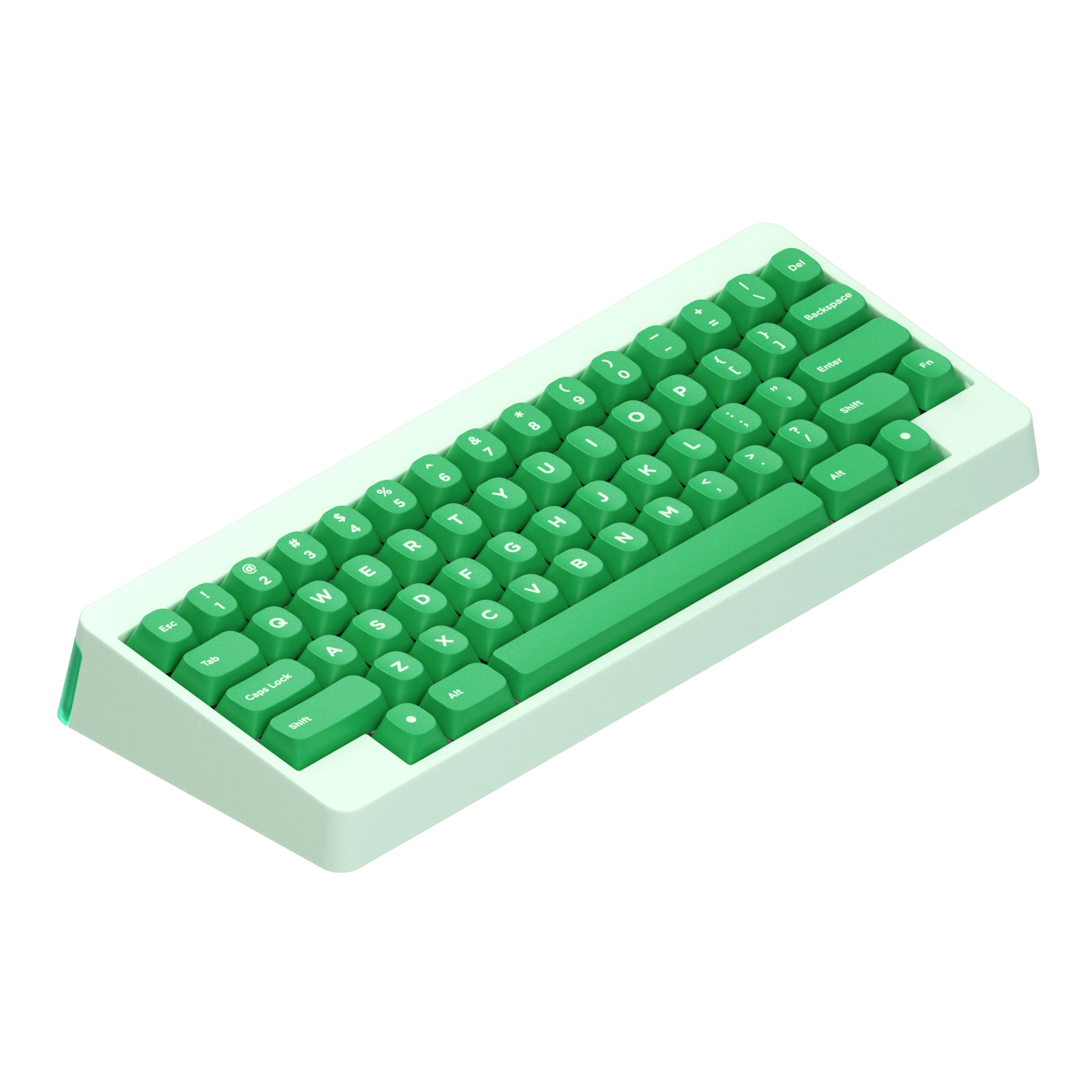
KEYGEM: a finished product and an unpaid vendor invoice
On December 5, 2025, German retailer KEYGEM acknowledged financial pressure, delayed refunds and unresolved Neo/QK preorders, saying those units still needed to be ordered. In July 2026 it said a warehouse clearance would help pay outstanding invoices and existing commitments. These were company explanations, not proof that every order had failed.
CannonKeys separately said KEYGEM had not paid invoices for Vida, Link and AK75. Its September 28 Link update reported receiving the units and completing quality control. It offered affected buyers a new purchase at original GB pricing with a US$40 discount per keyboard. That required another payment; it was not a free transfer of the original order or a guarantee of recovering the first payment.
The offer also had timing and stock conditions, including an October 8 reservation cutoff, so it should not be read as a promise of current availability. The practical lesson is to follow both the retailer and the supplier: a keyboard can be manufactured while the customer still cannot obtain it through the seller they paid. Keep order evidence and read the additional cost and eligibility of any proposed remedy.
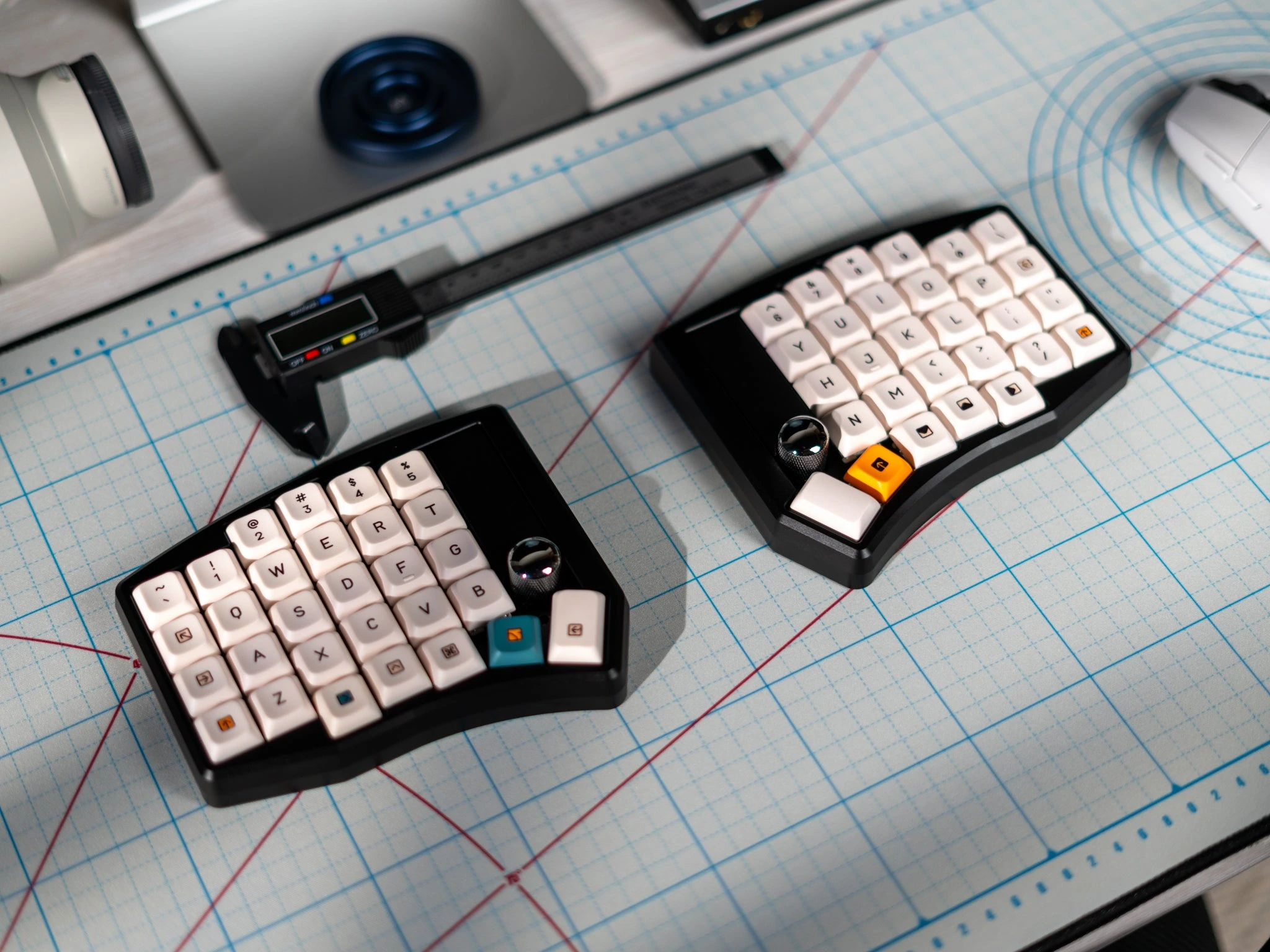
Naya: risk can continue after delivery
Naya’s Create Kickstarter ran in 2023. The company launched a separate Connect campaign in January 2026, whose FAQ estimated shipping in February–April 2027. Dorhout Advocaten, the trustees’ firm, lists Naya B.V. as bankrupt from August 18, 2026. Connect’s original future shipment estimate matters: being unshipped at that date is not, by itself, evidence it was already late.
The current naya.tech notice is published by Ultimate Gadget Laboratories, which bought the domain from the trustees, rather than by a continuing Naya business. It distinguishes existing owners, whose keyboards still function, from outstanding orders and says Naya warranty, parts and further software/firmware support end. Buying the domain is not presented as taking over those customer obligations.
This is not evidence that every Create order went undelivered. It shows why aftercare deserves attention too: check whether configuration tools work locally, what firmware is available, whether modules can be replaced, and who handles warranty claims if the original business stops operating.
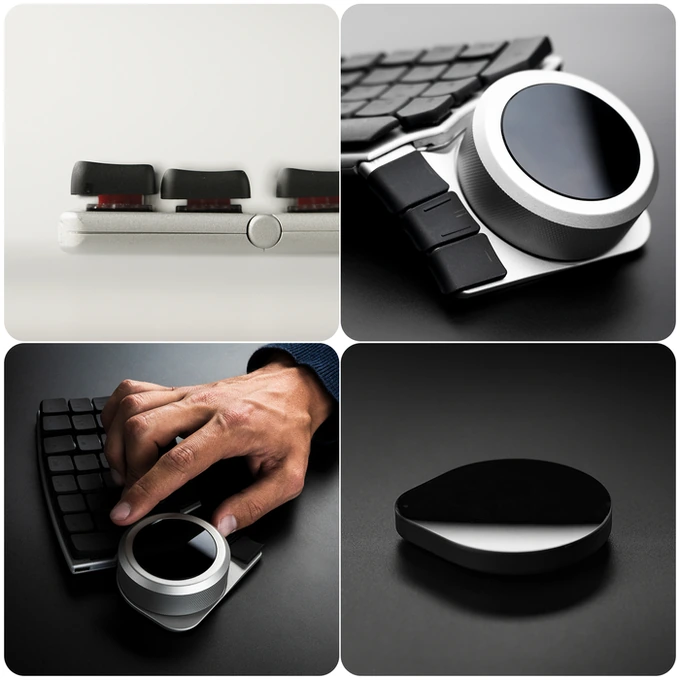
Read updates for remaining work and dependencies
An update is useful when it identifies a completed step, the next dependency and a realistic explanation of what changed. “In production” can cover very different stages. Compare the latest message with earlier promises and look for dated evidence of sampling, accepted production parts, quality control, freight and local dispatch.
A schedule should leave room for revisions, factory capacity, holidays, testing and transport. Neither a short estimate nor a long estimate proves reliability. Ask what the dates depend on and how a failure at one step changes the rest of the plan. Follow the organizer and regional seller, because they may control different stages.
Community discussions can reveal questions worth investigating, but comments are not a complete order ledger. Look for the exact model, batch, seller and date, then compare reports with primary project records. A photographed delivery proves that unit arrived; it does not prove every order was fulfilled.
A concrete example is SINGAKBD’s SMKX 2026 Reseda tracker. It separates material sourcing, CNC machining, surface treatment, anodization, quality control, assembly and packing, and shipment to vendors. When checked on October 27, 2026, the October 19 entry said “Preparing for anodization”; quality control and packing remained pending, with shipment to vendors estimated for December 2026. A vendor-shipment milestone is different from the date a customer receives the keyboard.
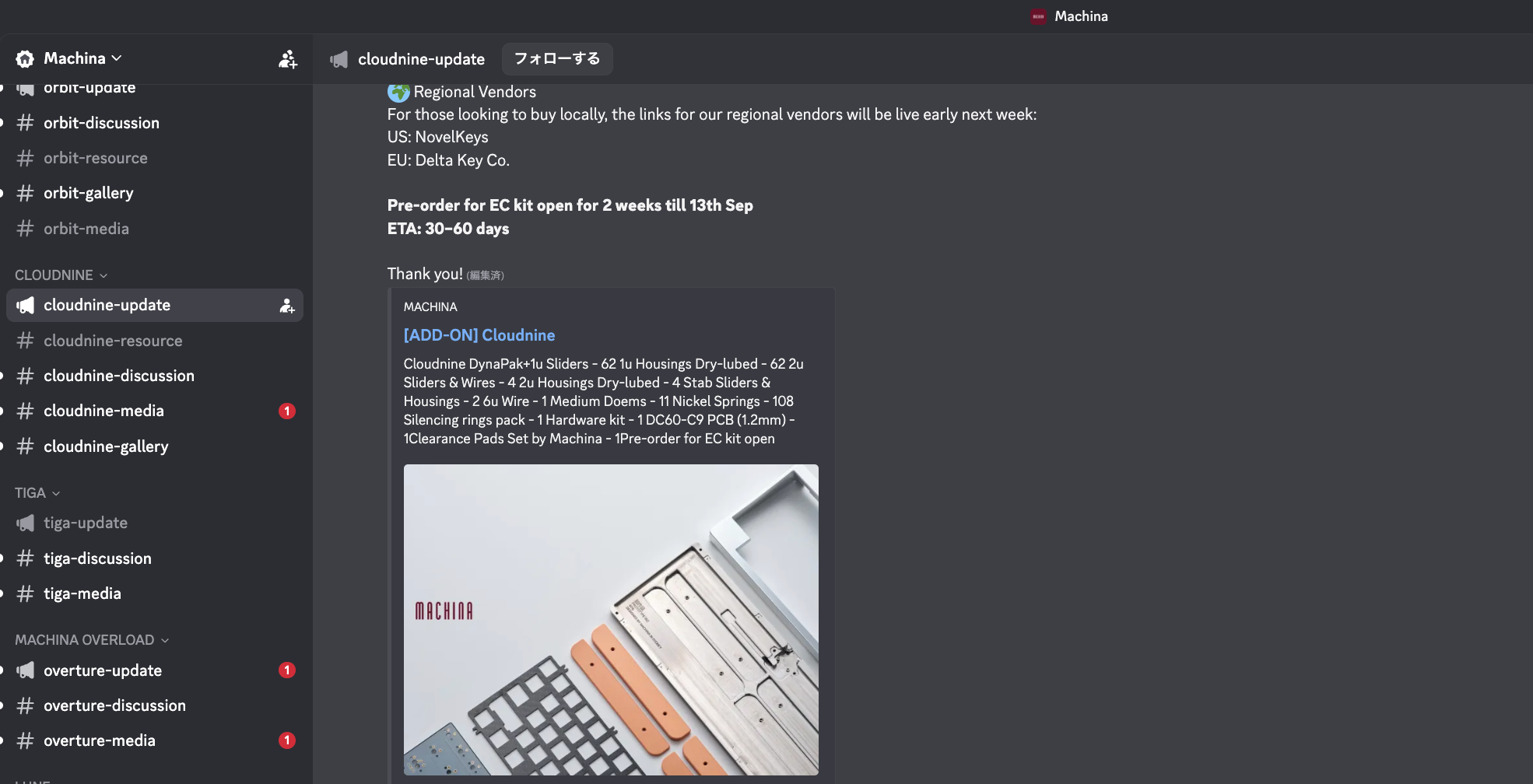
A dedicated Discord announcement channel provides another way to follow a project. The owner-supplied Machina Cloudnine announcement names regional vendors and gives an ordering window and estimated lead time. Save the message link and read later announcements for revisions. The screenshot does not show the post date, so its preorder cutoff and ETA are presented as a historical communication example, not as current availability or a delivery forecast.
Understand the payment and refund route
Before paying, identify the counterparty and read the project’s cancellation, amendment, refund and replacement terms. Check whether customer funds are used to start manufacturing, whether the supplier has been paid, and what the published procedure says if the MOQ is missed or the project is canceled. Do not assume money is ring-fenced unless the organizer provides evidence of that arrangement.
Keep a dated copy of the listing, selected options, estimated delivery, order confirmation, terms and important updates. If a problem appears, contact the seller and check the payment provider’s process promptly. Payment methods, dispute deadlines and legal rights differ; a store’s policy alone does not establish every right available to a customer.
A familiar platform, a previous successful run or a discounted rescue offer does not answer the same question as a refund. Work out who must act, whether another payment is required, and which parts of the original obligation remain unresolved.
Decide before joining a keyboard group buy
A useful decision combines product fit with evidence about execution. A limited run can offer an unusual design, but scarcity does not establish future resale value or make an uncertain delivery suitable for an urgent need. Waiting for finished inventory can be a reasonable choice when the missing information matters more than the early price or finish options.
Assess operating capacity rather than team size alone. Identify who can answer support requests, manage a factory problem, arrange replacement parts and maintain software. Small teams can have clear systems, while a familiar business can still encounter financial or supplier problems. The relevant question is what happens when the plan needs to change.
- Confirm the exact seller, organizer, manufacturer and product revision.
- Locate real prototype evidence and list the work still required for production and delivery.
- Read the actual ordering stage, MOQ, schedule, cancellation and refund conditions.
- Check both recent project updates and the handling of earlier delays or unresolved orders.
- Include shipping, taxes, required parts and any later payments in the total commitment.
- Consider replacement parts, firmware, configuration tools and warranty support after delivery.
- Save the order evidence and decide whether the uncertainty fits the budget and timing of the build.